
The Performer’s Guide to the Perfect Promo Shoot
Whether you are an aerialist, dancer, cabaret or circus performer, your promotional imagery is often the first thing a booker or festival director sees. In the performing arts, a few phone photos of you training or performing isn't enough. You need high quality, professional imagery that captures movement, power, and personality.
Capturing performance is vastly different from a standard portrait session. It requires a balance of technical precision and artistic trust. To help you get the most out of your next shoot, I’ve put together this guide on how to plan for a successful, high-impact promo session.
1. Choosing Your Backdrop: Studio, Location, or Great Outdoors?
The environment you choose sets the entire mood of your brand. Depending on your discipline, the "best" location varies.
The Studio: Controlled & Clean
Pros: Complete control over lighting and weather. It provides a ‘blank canvas’ that puts the entire focus on you and your costume and posing.
Cons: Can occasionally feel less "original" than a unique location.
The Performance Factor: If you are an aerialist or acrobat, ceiling height is non-negotiable. You also need to ensure the studio is equipped for aerial rigging. Some aerial studios have studio backdrops, but it’s worth noting that these need to be set up the correct distance from your rigging point.
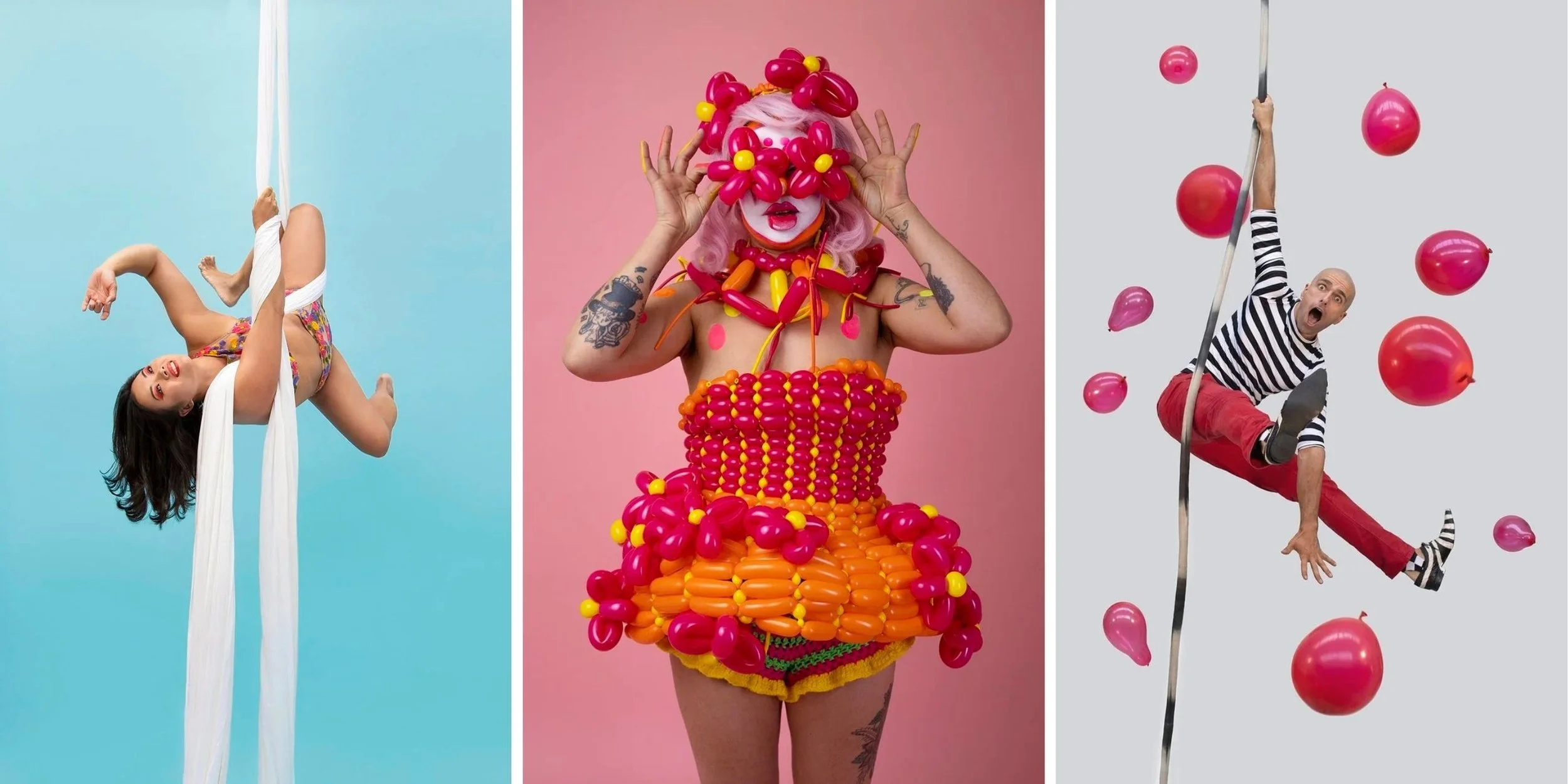
Aerialist Teri Su on silks, balloon artist & performer Dolly Pierrot, performer and actor Malik Ibheis
Indoor Locations: Character & Grandeur
(Think listed buildings, concert halls, churches, bars, or architectural homes)
Pros: These spaces add an immediate layer of storytelling and atmosphere. They can make a shoot feel ‘expensive’, cinematic and much more layered.
Cons: Location hire fees can be steep, and transporting lighting equipment into heritage sites can be a logistical challenge. The alternative can be shooting in a public location during opening hours, but this often isn’t feasible for long (management can often tell you off if it’s not been authorised!) and this only really suits those without props or equipment involved in the shoot.
The Performance Factor: Always check for floor surfaces (are they too slippery for a certain move?) and accessibility for your gear. If shooting in a public space, be aware of those around you and ideally get permission from management before you start!
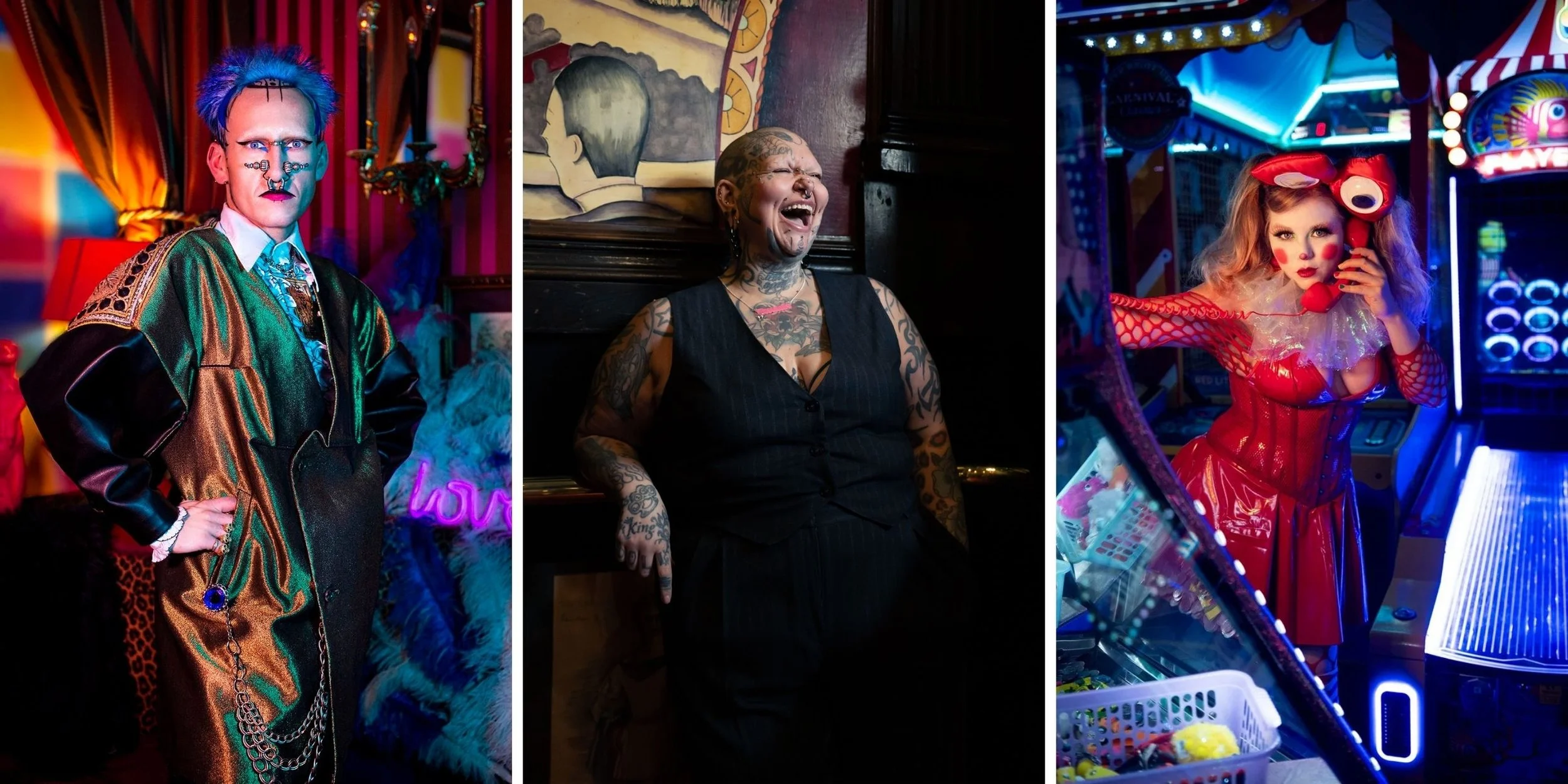
Photo shoots for ‘Lighting Like Scissors’ hair salon, performer Smashlyn Monroe, and DJ Can’t Say No
The Great Outdoors: Raw & Epic
Pros: Scale and natural beauty. Shooting in nature or an urban landscape can create a breathtaking contrast with a costume. Often, these locations are free.
Cons: You are at the mercy of the weather. Lighting can change in seconds, and wind can be a nightmare for costumes or balance.
The Performance Factor: Think about the ground. Is it stable enough for a prop? Is there a safe way to rig a silk to a tree or structure?
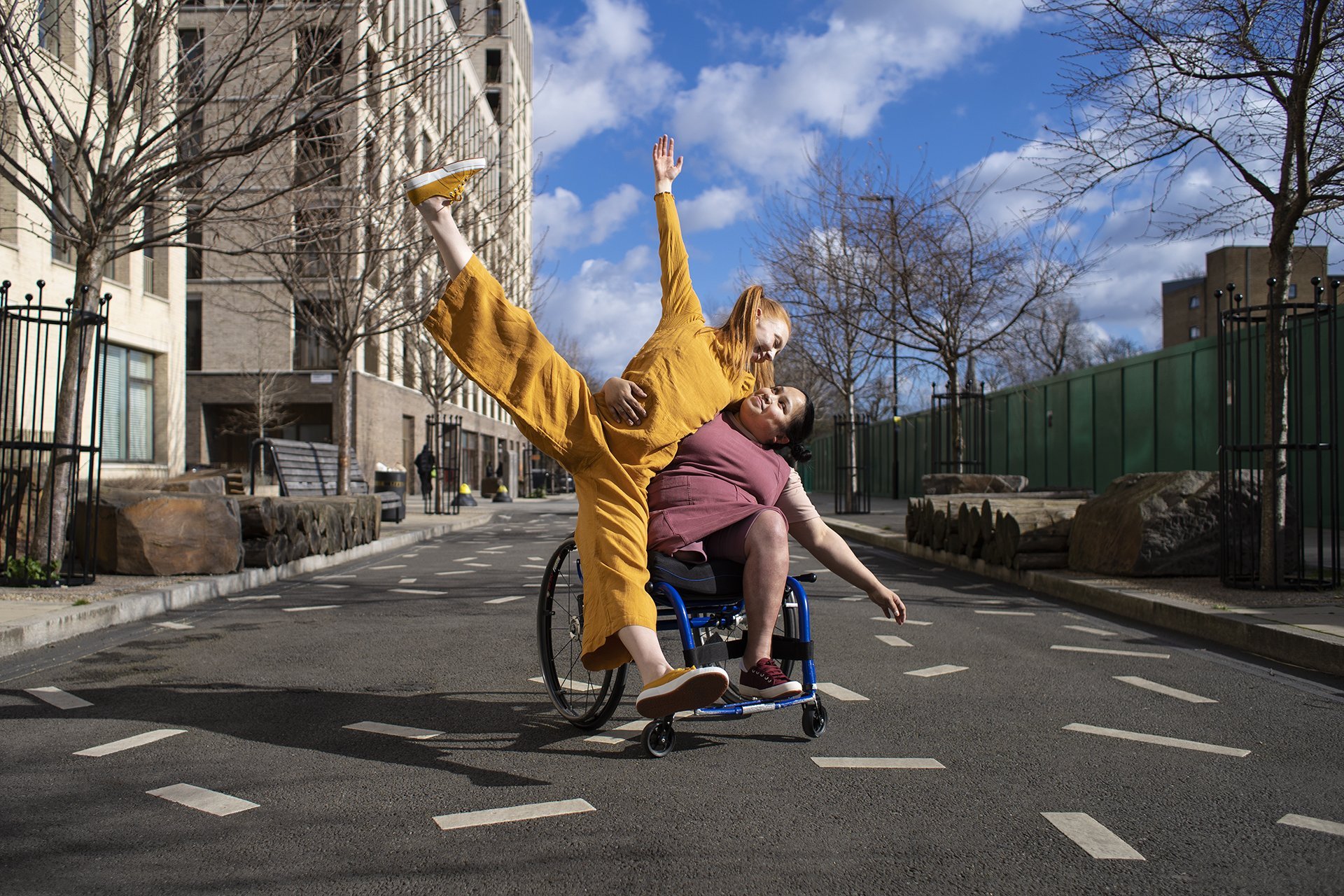
An outdoor photo shoot I did with Mimbre Acrobats for their show, ‘Look Mum, No Hands'.
2. Outfits: Balancing Flair with Function
Your costume is your visual calling card, but for a promo shoot, you need a strategic approach.
The Palette: If these photos are destined for your website, look at your existing brand colors. Do you want the photos to blend in with your site’s palette, or do you want them to provide a bold, contrasting ‘pop’?
The Variety: Bring multiple options. I recommend a mix of ‘full-glam’ performance wear and a more simplified version of your look. This gives you a range of images - from the epic show-stopper to the more intimate, personal branding shot. This is especially important if your clients range from raunchy late-night venues, to family-friendly festivals - make sure you’ve got a look that speaks to each of them.
The Practicality: Ensure you can actually move in everything you bring and, it probably goes without saying, but make sure it fits you properly too! There is nothing worse than a stunning costume that prevents you from hitting your peak extension or a key pose, and as well as looking great, you need to feel comfortable.
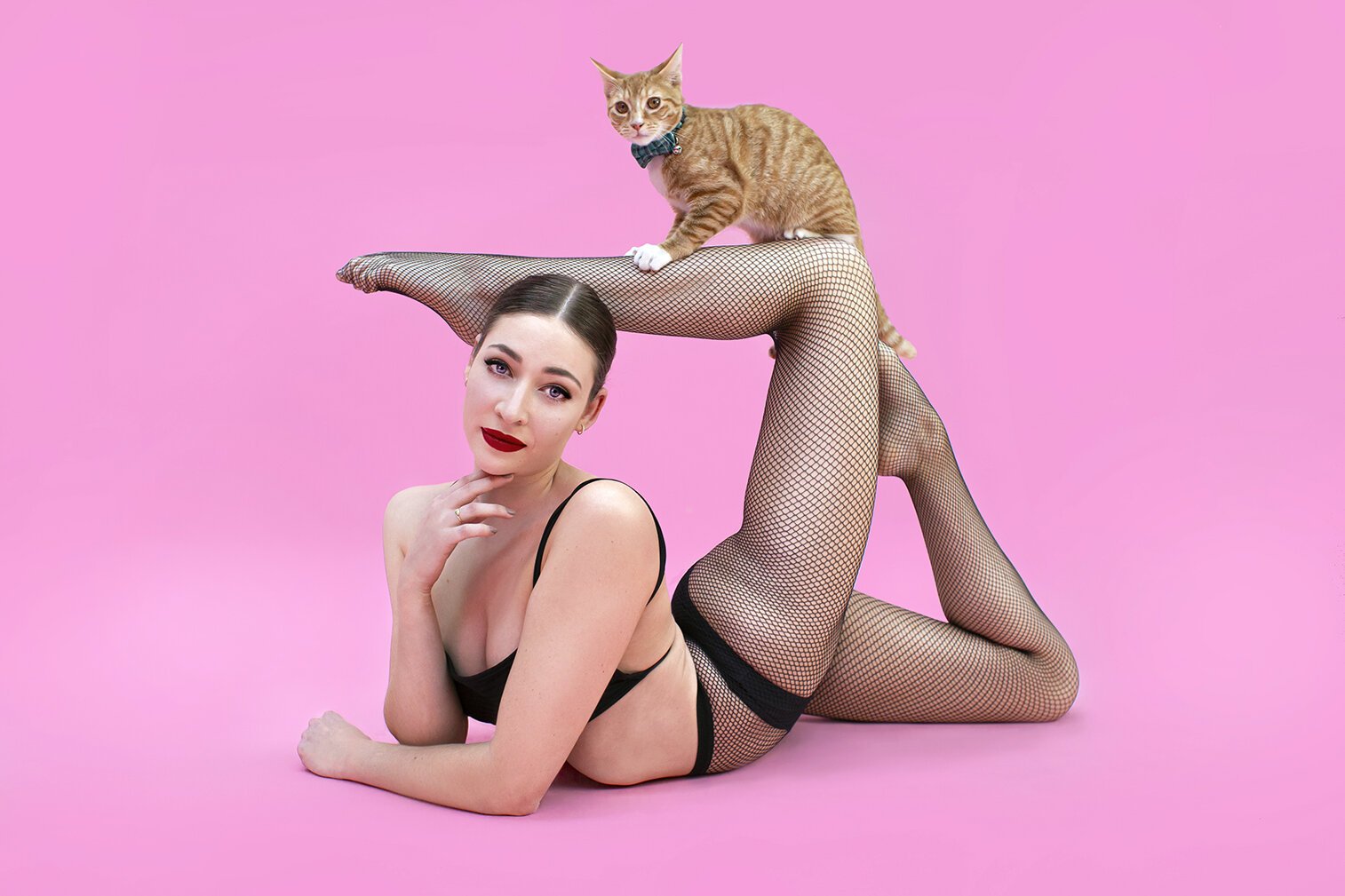
Contortionist Samantha Smith posing with Reuben the cat.
3. Mastering the Pose (and the Clock)
Movement is the heart of your work, but photography is about freezing a moment.
For Aerialists:
Physics is against you. You cannot hold a dynamic drop or a complex wrap for ten minutes while a photographer adjusts a light.
The Strategy: Make a shot list of specific moves before the shoot. We can then plan them in a logical order and make sure the lighting is set up for those specific shapes in advance, allowing you to hit the pose, snap the photo, and get down before fatigue sets in.
For Other Performers:
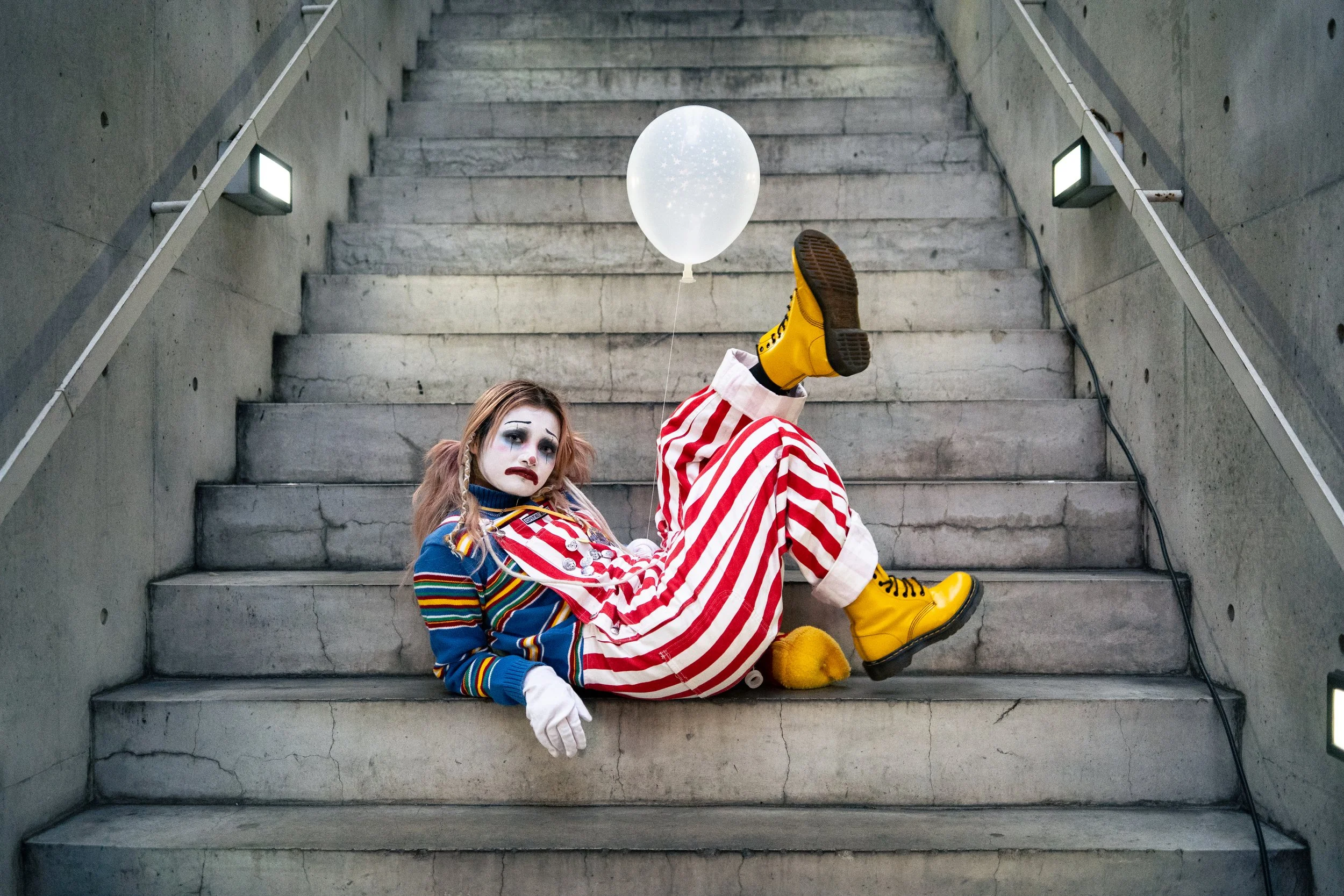
If you aren't in the air, use props to create depth. Don't just hold a prop; interact with it. Think about the lines your body creates - extension, tension, and asymmetry usually photograph better than static, centred poses.
4. Final Planning Tips for a Stress-Free Day
To ensure the day runs smoothly, keep these three things in mind:
The Warm-Up Window: Don't expect to hit your most difficult move the second you arrive. Factor in time to stretch and warm up your muscles so you can perform safely. At the same time, don’t leave your hardest move until last, when you’re going to be hitting fatigue.
The Moodboard: I love it when clients share a Pinterest board or a few Instagram screenshots of the feeling they want. Whether it's ‘Dark & Moody’ or ‘Neon & Energetic,’ it helps us get on the same page instantly.
The Playlist: Music changes everything, and it really makes a shoot feel less stiff when you’ve got some playing in the background! Bring a playlist that puts you in the zone of your performance and boosts your energy.
Hair & Makeup: To save time on set, do 90% of your hair and makeup prep at home, then just apply the final touches when you arrive. This stops your getting-ready eating into your booking time, and also means you don’t have to bring a whole extra bag of products with you!
Ready to capture the magic of your act?
From rigging requirements to the final edit, I specialise in the unique needs of the performing arts. Let’s create a visual identity that is as bold as your performance.